Small business insurance research desk
Compare business insurance by coverage, cost, industry, and contract
Biz Insurance Atlas helps small business owners compare policy structure, quote inputs, certificates, contracts, providers, and claim records before they buy.
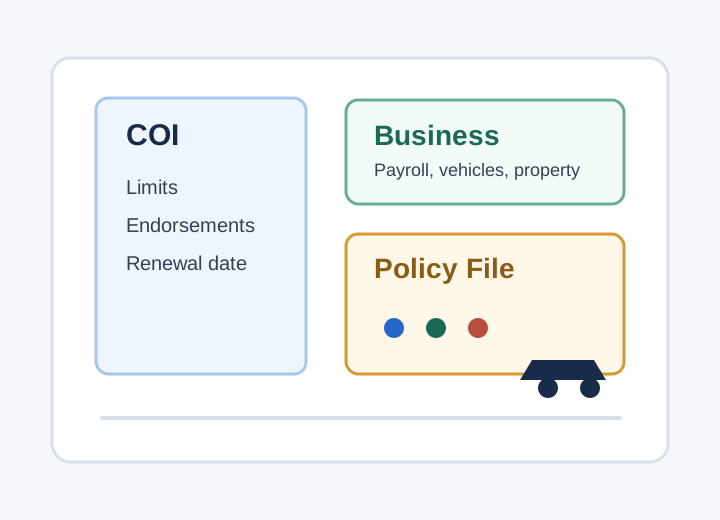
Compare business insurance without comparing the wrong things
Browse the atlas
Built for real small business decisions
Most business owners do not start with policy language. They start with a client request, lease clause, hiring decision, vehicle, tool purchase, claim, or renewal notice. The site follows those workflows.
Decision map
Common business moments that trigger an insurance review
A business owner usually looks for insurance because something changed. These moments help connect the right guide with the record that should be prepared next.
Build a policy file before comparing prices
Price matters, but a quote is easier to judge when the business has already organized its operations, contracts, property, vehicles, employees, and prior claim history. A thin application can produce a quote that looks attractive and still fails a lease, client contract, audit, or claim review.
Use the atlas as a preparation layer before speaking with a licensed insurance professional. The site does not sell or bind coverage; it helps owners ask sharper questions and keep better records.
Keep together
- Declarations pages and forms list.
- Contracts, leases, and certificate requests.
- Payroll, revenue, vehicle, and property schedules.
- Loss runs, claim letters, photos, and receipts.
Compare the policy forms and endorsements
A quote is only the beginning. The policy forms, exclusions, endorsements, and contract wording decide whether the insurance matches the business need.
For many small businesses, the most urgent question is not only price. It is whether a landlord, general contractor, lender, venue, or client will accept the certificate and whether the policy fits daily operations.
Before quotes
- Collect payroll, revenue, and owner details.
- List locations, vehicles, tools, and inventory.
- Save leases and client insurance requirements.
- Prepare prior claims or loss run documents.
Popular research questions
Start with the document or requirement already in front of you
Business owners often arrive with a contract phrase, endorsement question, audit term, or certificate problem—not a generic request for “business insurance.” These guides go directly to those tasks.
Reference Sources
Use public business and insurance resources, then read the policy forms, endorsements, and contracts that apply to your company.